Holiday Flight Delay Rights and Rebooking Guidance
Your rights when holiday flights are delayed or cancelled, plus how to rebook when all flights are full during peak travel.
Save it in this browser to find it later.
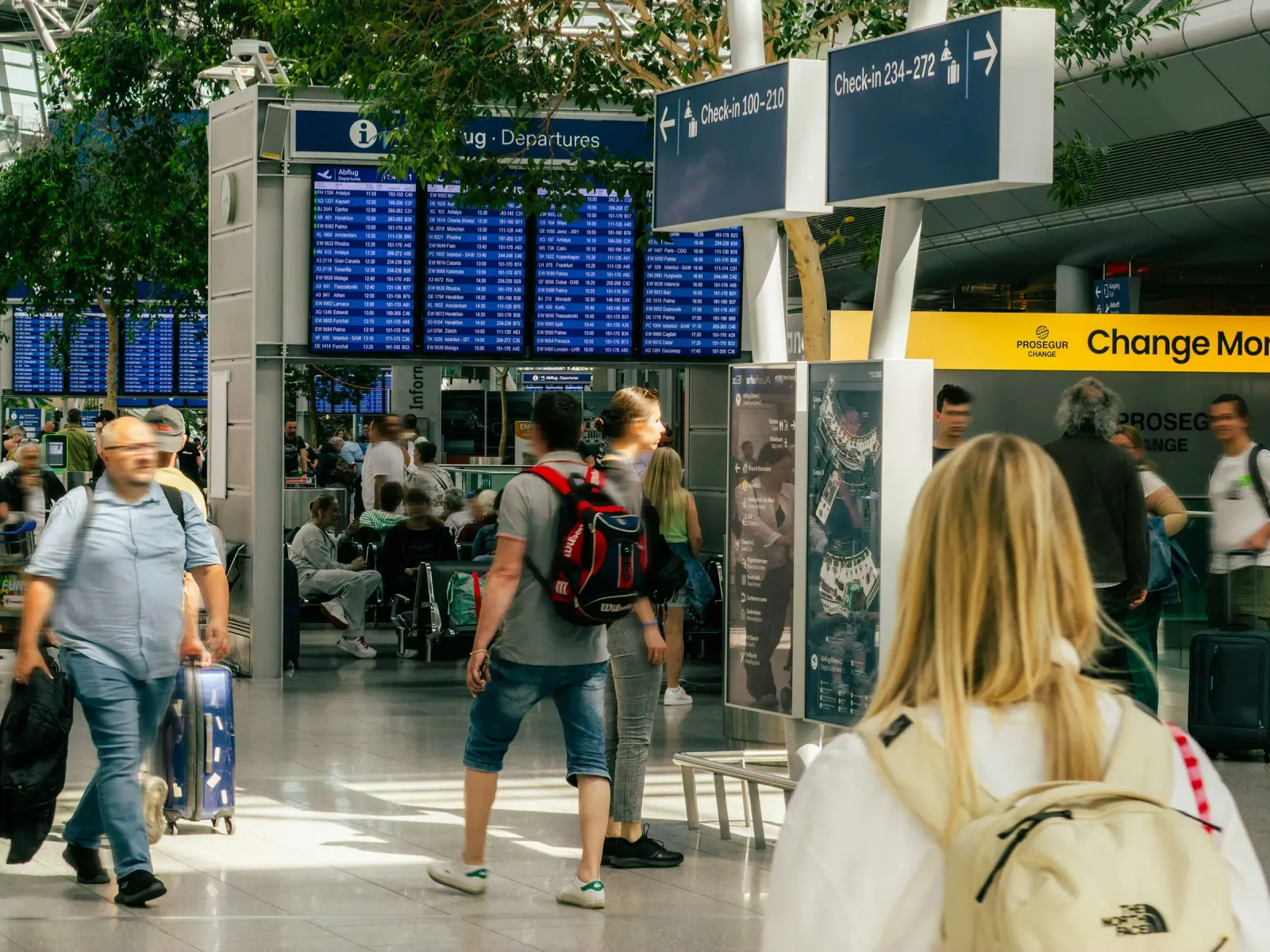
Your rights when a flight is cancelled or delayed during the holidays are the same as any other time—you're entitled to a refund if your flight is cancelled or significantly delayed (3+ hours domestic), regardless of the reason. But holiday travel adds real challenges: flights are fuller, rebooking is harder, and the personal stakes are higher when you're trying to get home to family.
Your rights when holiday flights are delayed or cancelled
The Department of Transportation refund rules don't change for Thanksgiving or Christmas. If your flight is cancelled or delayed by 3 or more hours (6 for international), you can choose a full refund to your original payment method. This applies whether the disruption was weather, staffing, mechanical issues, or any other reason.
You'll also be offered rebooking on the next available flight at no charge. If you accept that rebooking, you give up your right to a refund. The airline must tell you about your refund option when offering to rebook you.
If the delay is the airline's fault (not weather), check the DOT dashboard for what your specific airline has committed to provide. Most major carriers now offer meal vouchers, hotel rooms for overnight delays, and ground transportation when disruptions are within their control.
Travel waivers: what they mean for your trip
During major storms around Thanksgiving or Christmas, airlines often issue travel waivers. A waiver lets you change your flight without the usual change fee, usually for a few days before or after your original date. It's not a cancellation notice—your flight may still operate as scheduled.
Waivers apply to specific airports and date ranges. If you're connecting through a city covered by the waiver, you're eligible even if your departure and arrival cities aren't affected. For example, flying Los Angeles to Boston through Newark when a Newark storm waiver is issued means you can rebook.
Check your airline's website or app for active waivers. The fine print tells you which airports are covered, the original travel dates affected, how far out you can rebook, and the deadline to make the change. Each airline sets its own terms—Southwest typically allows rebooking up to 14 days out, while others may limit it to a shorter window.
A waiver doesn't create a refund right you didn't already have. It just waives the airline's own change fees. If your flight operates and you choose not to take it, you're still bound by your ticket's refund rules.
Rebooking when all flights are full
Holiday flights run at or near capacity, so a cancellation can leave hundreds of passengers competing for limited seats. Over the last five Christmas travel periods (2021-2025), 13.5% of U.S. domestic flights from December 18-31 were disrupted, compared to 8.5% during normal weeks, according to FlightForecasts. The day after Christmas sees disruption rates above 20%.
When your flight is cancelled, don't just stand in the customer service line. While you're waiting, open the airline's app and rebook yourself there. During a mass cancellation, getting into the app early can mean the difference between a seat on the next flight and waiting a day or more.
If the airline's app shows all flights full, ask the gate agent to check other carriers. Some airlines have interline agreements that let them rebook you on a competitor's flight at no charge. United can rebook passengers on American, Delta, JetBlue, and Alaska. Southwest doesn't have these agreements and can only rebook on Southwest flights.
Don't take "everything is full" as final. Flight inventory changes constantly as passengers cancel, rebook, or miss connections. Ask to be added to the standby list for earlier flights, then check the app periodically for openings. A lot can happen between when an agent says a flight is full and when it actually departs.
If you need to get somewhere during the holidays and can't find a flight that day, consider:
- Alternative airports within driving distance of your destination
- Earlier morning flights the next day (less likely to have cascading delays)
- Flights with connections through different hubs, which may have more availability than direct routes
- Driving part of the way, then flying from a city with better options
What to do if you're stranded during the holidays
If you're stuck overnight far from home during Thanksgiving or Christmas, your options depend on what caused the disruption. When it's the airline's fault (crew issues, mechanical problems, their own scheduling), most major carriers will provide a hotel room and transportation to it. When it's weather, they typically won't, though some will if you ask.
Keep receipts for meals, hotels, and ground transportation you pay for yourself. While U.S. airlines aren't legally required to reimburse these for weather delays, some will cover reasonable expenses if you submit a claim, especially for extended disruptions during the holidays.
Document everything: take photos of departure boards showing cancellations, save notification emails and texts, screenshot the rebooking options you were offered. If you need to file a claim or dispute later, contemporaneous records are what matter.
If you're traveling with kids, have enough snacks, medications, and entertainment for an unexpected overnight. During peak holiday travel, airport restaurants and shops can run low on supplies when hundreds of passengers are stranded.
How to prepare before you fly
Before leaving for a Thanksgiving or Christmas trip, spend a few minutes on backup planning. What other routes could get you there? Are there alternative airports near your destination? Could you drive part of the way if needed? During the holidays, when missing the gathering isn't an option for most people, knowing your alternatives before a disruption happens means you can act fast.
Download your airline's app if you haven't already, and save their customer service number where you can find it offline. Check whether a travel waiver has been issued for your dates and airports—if one is active and you have schedule flexibility, rebooking ahead of a storm may be less stressful than waiting to see if your original flight operates.
Book earlier flights when possible. Morning departures are less likely to face delays from earlier flights running late, and if something does go wrong, you have the rest of the day to find alternatives. During the holidays, when airlines operate near capacity, that scheduling buffer can make the difference between making it home and missing the meal.
Missing family gatherings vs. taking a refund
When your flight is cancelled on Thanksgiving morning or December 23, the law gives you the right to a full refund. But getting that money back doesn't help if you need to be somewhere specific on a specific day. This is the real challenge of holiday disruptions: your legal rights are intact, but your practical options are limited.
Most travelers accept whatever rebooking the airline offers, even if it means arriving a day late, because buying a last-minute ticket on another carrier during the holidays is both expensive and unlikely to have availability. If you do choose the refund, check other airlines immediately—seats disappear fast when a major flight gets cancelled during peak travel.
Need help navigating a flight disruption?
Sky Stuck provides clear, step-by-step guidance for handling delays, cancellations, and other travel disruptions. Check what your airline owes you and what to do next.
For official airport updates and current airline travel alerts, read the flight status and airline travel alerts guide.
Need help navigating a flight disruption?
Visit the full Sky Stuck guide for step-by-step information on what to do when your travel plans go wrong.
Visit Sky Stuck Guide